
The Hypertext Transfer Protocol (HTTP) is the foundation of the World Wide Web, responsible for transferring data between web servers and clients. Over the years, HTTP has undergone significant evolution to address the increasing demands of modern web applications. This blog post will delve into the key differences between HTTP 1.1, HTTP 2.0, and HTTP 3.0, providing a comprehensive comparison table.
HTTP 1.1
HTTP 1.1, introduced in 1997, was a significant improvement over its predecessors. It introduced several enhancements, including:
- Persistent Connections: This feature allows multiple requests and responses to be sent over a single TCP connection, reducing overhead.
- Pipelining: While not widely implemented, pipelining allows multiple requests to be sent sequentially without waiting for responses, improving performance.
- Chunking: This mechanism enables servers to send data in smaller chunks, enhancing flexibility and efficiency.
HTTP 2.0
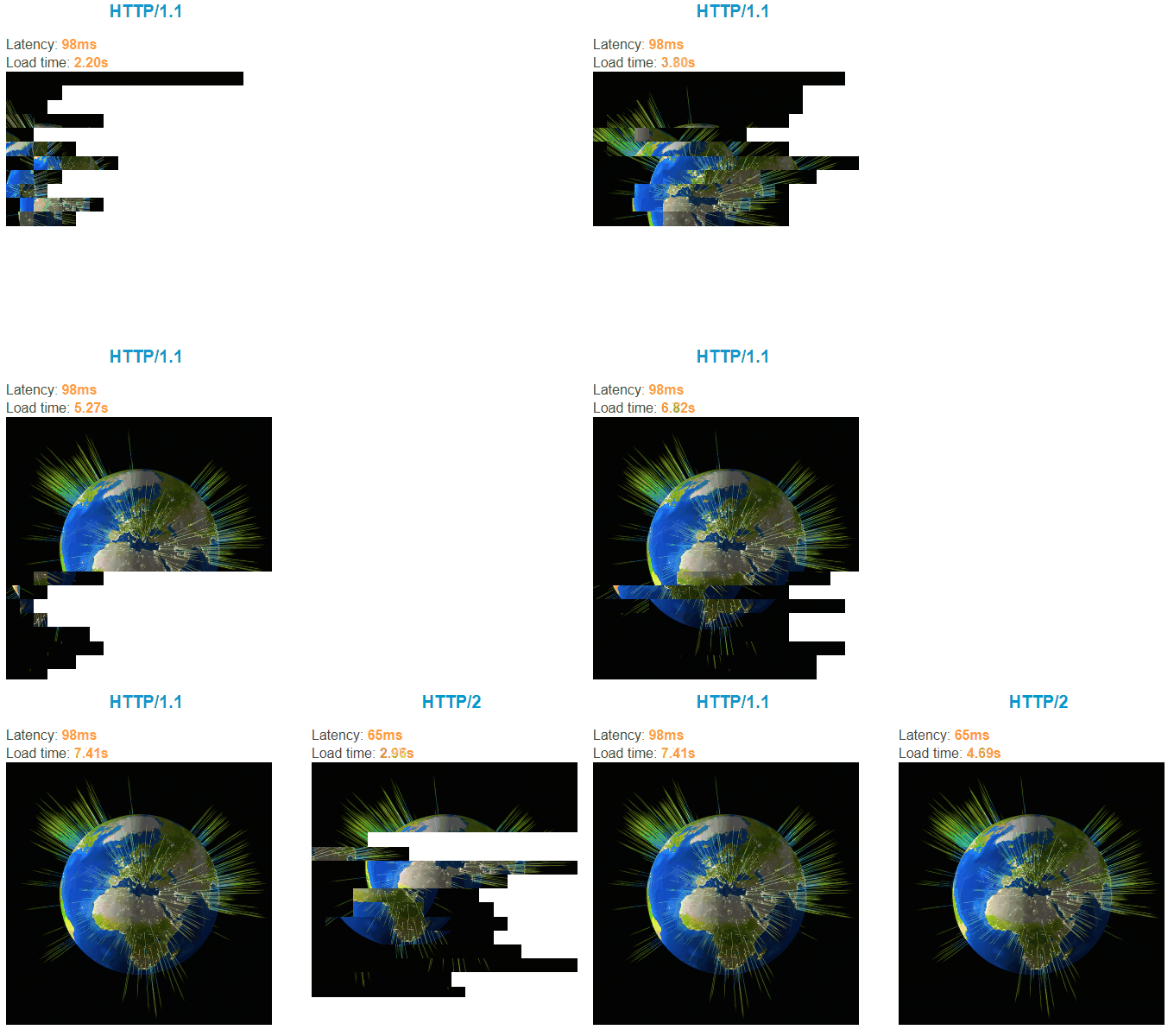
HTTP 2.0, released in 2015, marked a substantial departure from HTTP 1.1. It introduced several innovative features to address the limitations of its predecessor:
- Multiple Multiplexed Streams: HTTP 2.0 allows multiple requests and responses to be interleaved over a single TCP connection, eliminating the need for pipelining.
- Header Compression: By compressing HTTP headers, HTTP 2.0 reduces network overhead and improves performance.
- Server Push: This feature allows servers to proactively send resources to clients before they are requested, reducing latency.
- Binary Framing: HTTP 2.0 uses a binary format for messages, making it more efficient and easier to parse than the text-based format of HTTP 1.1.
HTTP 3.0
HTTP 3.0, also known as QUIC, is a relatively new protocol that builds upon the UDP transport layer. It offers several advantages over HTTP 2.0:
- UDP-based: Unlike HTTP 1.1 and HTTP 2.0, which rely on TCP, HTTP 3.0 uses UDP, providing lower latency and reduced congestion control.
- Congestion Control: HTTP 3.0 incorporates advanced congestion control mechanisms to optimize performance over various network conditions.
- Multiple Connections: It allows multiple connections between a client and a server, improving resilience and performance.
Comparison Table
| Feature | HTTP 1.1 | HTTP 2.0 | HTTP 3.0 (QUIC) |
|---|---|---|---|
| Transport Layer | TCP | TCP | UDP |
| Multiplexing | Pipelining (limited) | Multiple multiplexed streams | Multiple connections |
| Header Compression | No | Yes | Yes |
| Server Push | No | Yes | Yes |
| Binary Framing | No | Yes | Yes |
| Congestion Control | TCP’s congestion control | TCP’s congestion control | Advanced congestion control |

Conclusion
HTTP has evolved significantly over the years, with each new version addressing the limitations of its predecessor. HTTP 2.0 introduced major improvements in performance and efficiency, while HTTP 3.0 offers even greater potential through its use of UDP and advanced congestion control. As web applications continue to grow in complexity and demand, these protocols will play a crucial role in ensuring a seamless and efficient user experience.